What a Fiberglass Garage Door Actually Is
The term "fiberglass garage door" is a little misleading, because almost no fiberglass door is purely fiberglass. What most manufacturers sell is a composite door: a fiberglass or fiberglass-reinforced polymer (FRP) skin bonded over an insulated core, framed and reinforced internally with aluminum or galvanized steel. The fiberglass layer is the part you see and touch, while the structural strength and insulation come from the layers behind it. This construction is why fiberglass doors can be molded with deep, convincing wood-grain texture while staying far lighter than an actual wood door.
Because the visible surface is a polymer rather than metal, a fiberglass door does not dent the way a thin steel skin does when a basketball or a backed-up bumper finds it. It also will not rust, which is the single biggest reason it gets recommended for damp environments. The trade-off is that fiberglass can fade, chalk, or grow brittle under years of harsh UV exposure if it is a lower-grade panel, and Sacramento delivers plenty of intense summer sun. The quality of the resin and the UV inhibitors in the surface coat is what separates a fiberglass door that still looks good in many years from one that yellows and cracks.
When we bring sample panels to your home, the first thing we have you do is press on the skin and look at the edge cross-section. A well-built fiberglass door has a thick, rigid skin, a continuous insulated core with no voids, and clean, sealed edges where the skin meets the frame. Those edges matter more than most people realize, because that is where moisture and air try to get in.
Why Fiberglass Suits a Lot of Sacramento Homes
Sacramento is not coastal, but our climate has two features that make fiberglass worth a serious look. The first is humidity in specific micro-areas. Homes near the Sacramento and American rivers, properties backing onto the Delta around Freeport and Clarksburg, and lots with heavy irrigation or pools can hold real moisture against a garage door for hours at a time. Add the dense Tule fog that settles into the valley on winter mornings and you get repeated wet-dry cycles that punish wood and slowly find the weak points in cheaper steel. Fiberglass simply does not care about any of that; it will not rust, rot, swell, or warp from moisture.
The second feature is heat. Our summers routinely push past 100 degrees, and an attached garage with a sun-facing door becomes an oven that bleeds heat into the rest of the house. Fiberglass doors are almost always sold with an insulated core, and the composite skin itself transfers heat more slowly than bare metal. For homes in Roseville, Rocklin, and the western Placer County suburbs where garages double as gyms, workshops, or laundry rooms, that insulation can meaningfully cut how hard the home's cooling has to work along that wall.
There is also a coastal-salt argument that occasionally applies. If you keep a boat trailer, regularly drive to the Bay Area or the coast, or live where any salt or hard-water spray reaches the door, fiberglass removes the corrosion question entirely. It is the same reasoning that makes fiberglass popular in true beach towns, applied to the smaller subset of Sacramento homeowners who deal with salt or constant moisture.
The Honest Drawbacks for Our Climate
Fiberglass is not the automatic winner, and we would rather tell you that up front than sell you the wrong door. The biggest concern in the Sacramento Valley is sustained UV and heat. A fiberglass panel that is left exposed to full afternoon sun for years can fade, lose gloss, or in low-quality cases become brittle. Color choice and panel quality matter here: lighter finishes hide fading better, and premium doors carry far stronger UV protection than budget lines. A south- or west-facing door takes the worst of it, so orientation is part of the conversation when we look at your home.
Cold brittleness is the second issue, though it is minor for us. Fiberglass can become more impact-prone in genuinely freezing weather. Sacramento rarely gets cold enough for this to be a real concern, so it weighs much more heavily in mountain towns than it does on the valley floor. We mention it only because it shows up in national reviews and homeowners ask about it.
Finally, fiberglass tends to sit in a higher price bracket than basic steel, and the visual quality varies a lot by manufacturer. A cheap fiberglass door can look plasticky, while a good one is hard to tell from stained wood at curb distance. Repairs can also be trickier than steel, because a cracked composite section usually means replacing the section rather than dent-pulling it. The right move is to compare a real fiberglass sample against a steel and a wood option side by side, in your actual light, before deciding.
Finishes, Wood-Look Options, and Curb Appeal
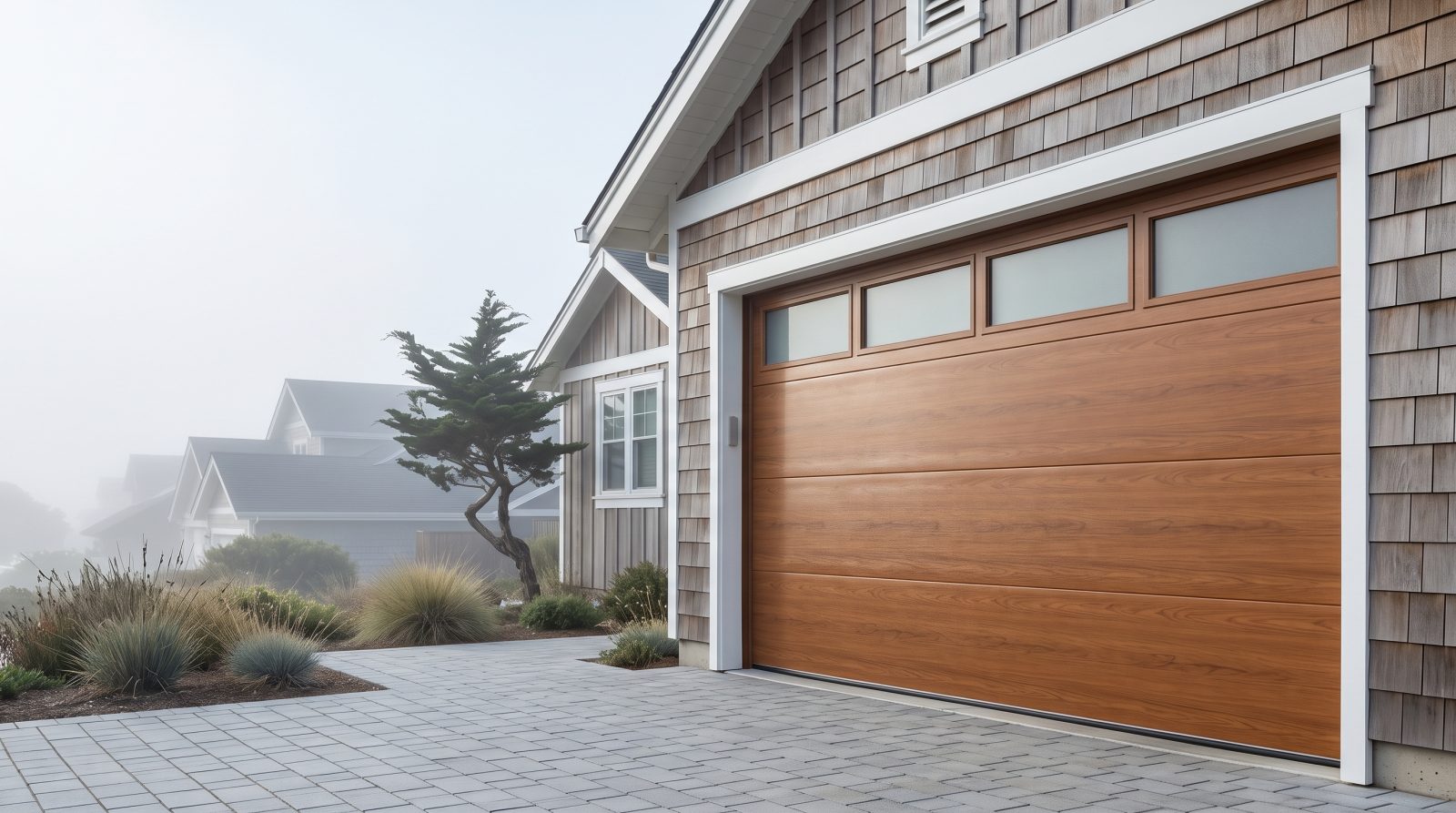
The single most popular reason Sacramento homeowners choose fiberglass is the wood look. High-end fiberglass doors are molded directly from real wood, so the grain texture is three-dimensional rather than printed, and they accept stain-style finishes that read as mahogany, cedar, oak, or walnut from the street. For neighborhoods with HOA expectations or older custom homes in Land Park, East Sacramento, and the Fab 40s, this lets you get the warm, high-end wood appearance without the sanding, resealing, and refinishing that real wood demands every couple of years in our sun.
Beyond wood-grain, fiberglass is available in smooth painted finishes, with or without windows, and in the same panel styles you would expect from steel: traditional raised-panel, flush contemporary, and carriage-house designs with decorative hardware. Glass options range from clear to frosted to obscure privacy glass, which matters for garages that face the street or sit close to a neighbor. Because the door is light, you also have a bit more freedom with larger window sections without overstressing the opener.
When we visit, we bring color and grain samples and hold them against your siding, trim, and roof in natural light, because garage finishes look completely different on a phone screen than they do on your actual house at 4 p.m. in July. The garage door is often the largest single visual element on a home's front elevation, so getting the finish right is as much a resale decision as a personal-taste one.
Cost Ranges, Insulation, and What to Budget
Pricing for garage doors varies widely by size, insulation level, finish, window count, and brand, so anything you read online should be treated as a labeled industry range rather than a quote. As a general guide, fiberglass and composite doors typically fall into a mid-to-upper price tier: usually more than entry-level single-layer steel, roughly comparable to high-end insulated steel, and generally below true solid-wood doors. Premium wood-look fiberglass with custom finishes and decorative glass sits at the top of that range. The only way to get a real number for your home is an on-site measurement, because opening size and existing track condition change everything.
Insulation is worth paying attention to as a line item. Fiberglass doors are commonly offered with polyurethane or polystyrene cores, and the insulating value (often shown as an R-value) climbs with core thickness and door layers. For an attached Sacramento garage that bakes in summer, the higher-R option is frequently worth the upgrade, because the energy savings and comfort along that wall add up over our long cooling season. For a detached, unconditioned garage you use mostly for storage, a lighter spec may be all you need.
We also factor in the parts you cannot see. A heavier or larger door may need different springs and a stronger opener, and worn rollers, hinges, and weatherstripping are the right thing to address during an install rather than after. Because we are mobile, we carry common hardware on the truck, do the measuring and the install at your home, and give you the full breakdown before any work starts. If fiberglass turns out to be the wrong fit for your budget or orientation, we will say so and walk you through the steel or wood alternative instead. Call or request a free quote and we will bring samples to your driveway.