How Rollers and Tracks Keep Your Door Moving
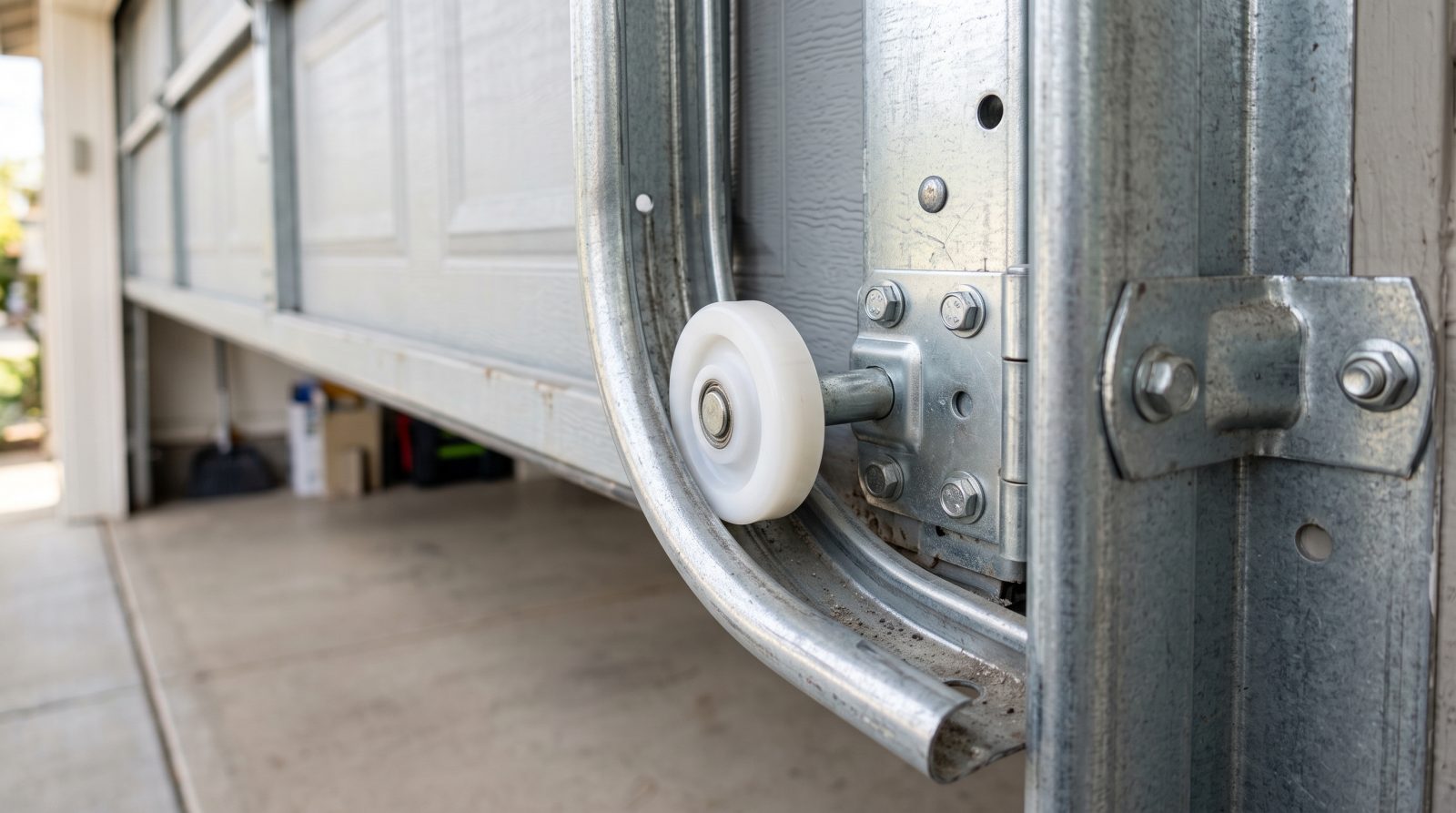
Your garage door does not lift straight up. It curves: it travels up the vertical track on each side, bends through a radius at the top, and then rolls back along the horizontal track that runs into your garage ceiling. The rollers are the small wheels, usually one in each hinge and at the top and bottom of the door, that ride inside those tracks and let a heavy door glide instead of scrape. When everything is aligned and the rollers turn freely, the door moves quietly and the opener barely has to work. When a roller seizes, wobbles, or the track bows out of shape, the door starts to fight the path it is supposed to follow, and that fight is what you hear and feel.
There are a few common roller types, and the difference matters for noise and longevity. Plain steel rollers with no bearings are the cheapest and the loudest, and they tend to flat-spot and rumble as they age. Steel rollers with sealed ball bearings run smoother and last longer. Nylon rollers, especially sealed nylon with bearings, are the quietest option and are a popular upgrade for homeowners with bedrooms over or beside the garage. The track itself is formed galvanized steel, bolted to the framing and to a curved section at the top; it is precise hardware, and even a small dent or a loosened bracket can throw the door off its line.
Because the rollers and tracks carry the door through every cycle, they are also the early-warning system for the rest of the door. A door that has started to bind on rough rollers puts extra load on the springs, the cables, and the opener motor. Catching a worn-roller or bent-track problem early is often the difference between a straightforward parts swap and a much larger repair after a cable snaps or the door drops off track.
- Vertical track: the straight rails on each side the door climbs as it opens
- Curved (radius) section: where the track bends from vertical to horizontal at the top
- Horizontal track: runs back into the garage and holds the door overhead when open
- Rollers: the wheels in each hinge and at the top/bottom corners that ride in the track
- Roller types, quietest to loudest: sealed nylon with bearings, steel with bearings, plain steel
Signs Your Rollers or Track Need Attention
Most roller and track problems announce themselves through sound and movement long before the door actually fails. The classic early sign is noise that has changed character: a new grinding, squealing, or rumbling that was not there a year ago, often loudest at the same spot in the door's travel each time. Grinding and a metallic rumble usually point to worn or bearing-failed rollers; a sharp squeal frequently means rollers and hinges have gone dry; a rhythmic thump can be a flat-spotted roller hitting the track on every rotation.
Movement is the other tell. Watch the door go up and down. If it jerks, hesitates, or shudders at a certain point, a roller may be dragging or the track may be pinched or bowed there. If the door looks crooked, leans to one side, or you can see a roller sitting away from the track with a visible gap, that is a track-alignment problem that needs hands-on attention before it gets worse. Rubbing marks or shiny scrapes on the track, gouges in the wall framing beside the track, and loose or missing track bolts are all worth pointing out when a technician arrives.
A bent track deserves special caution. Tracks bend from cars or bikes bumping them, from impacts, from someone forcing a stuck door, or simply from old, fatigued brackets sagging over the years. A door that runs through a kinked or flared track can pop a roller out, and once a roller leaves the track the door can jam at an angle or, in a worst case, come down hard. If your door is grinding badly, getting visibly stuck, or you can see a roller off its rail, stop running it and request service rather than forcing it through the bad spot.
- New grinding, squealing, or rumbling, especially loudest at one point in the travel
- The door jerks, hesitates, or shudders instead of moving smoothly
- The door looks crooked or one side sits lower than the other
- A visible gap between a roller and the track, or a roller sitting outside the track
- Scrape marks, dents, or kinks in the track, or loose and missing track bolts
- The opener straining, working harder, or the door getting stuck partway
What a Mobile Roller and Track Repair Visit Looks Like
Because we are mobile, the whole repair happens in your driveway or garage, and a good visit starts with diagnosis rather than parts. The technician runs the door through a full cycle to find exactly where it binds or makes noise, then inspects the rollers, hinges, tracks, brackets, and the cables and springs that work alongside them. A lot of noise complaints turn out to be a handful of worn rollers and dry hinges, which is a clean, affordable fix. Others reveal a track that has been knocked out of alignment or a bracket that has worked loose, which is adjusted and re-secured rather than replaced.
When rollers are the issue, replacing them is usually straightforward: the technician swaps worn rollers for new ones, and this is the natural moment to ask about upgrading to sealed nylon rollers if a quieter door matters to you. When a track is misaligned but not damaged, it can often be loosened, realigned to the proper spacing, and re-tightened so the door rides true again. A genuinely bent or kinked section of track typically needs to be replaced, because a track that has been straightened by hand rarely holds its shape and the door will fight it again. An honest technician will tell you plainly which of these your door needs and why, and give you a clear price range before any work begins.
One safety note that shapes how this work is done: the rollers and track sit in a system that includes high-tension springs and cables. The bottom-bracket rollers in particular are next to cable connections that are under serious load, which is why roller and track work near the bottom of the door is not a safe DIY job. Trained technicians know how to handle that tension safely. After the repair, we re-test the door's travel and balance, confirm the noise or binding is actually gone, and make sure the safety reverse still works before calling it done.
- Full diagnostic cycle to pinpoint where the door binds or gets loud
- Inspection of rollers, hinges, tracks, brackets, cables, and springs together
- Worn rollers replaced; optional upgrade to quieter sealed nylon rollers
- Misaligned track realigned and re-secured; bent or kinked track sections replaced
- Proper lubrication of rollers and hinges with garage-door lubricant, not WD-40
- Door re-tested for smooth travel, balance, and working safety reverse
Why Sacramento Conditions Wear Rollers and Tracks Faster
Garage doors in the Sacramento area live a harder life than people assume, and rollers and tracks take the brunt of it. Our long, hot valley summers, with stretches of triple-digit heat, bake the inside of an attached garage and the steel hardware in it. Heat thins and bakes off whatever lubricant is on the rollers and hinges, so parts that were quiet in spring start grinding by August. The dry, dusty months between rains let fine grit settle into rollers and tracks, and that grit acts like sandpaper, accelerating wear on bearings and chewing up plain steel rollers in particular.
Then the weather flips. Wet Sacramento winters and valley fog bring moisture and condensation into the garage, and bare steel rollers and tracks can surface-rust where the protective coating has worn thin. The repeated swing between hot, dry summers and damp winters is exactly the cycle that dries lubricant out, invites rust, and loosens the bolts holding tracks to the framing. Doors in older Sacramento neighborhoods, from Land Park and Curtis Park to East Sac and the older pockets of Carmichael and Citrus Heights, often have original hardware that has been through decades of these cycles, so worn rollers and sagging track brackets are common there.
Day-to-day use adds up too. For a lot of households here the garage door is the main way in and out of the house, cycling several times a day as people leave for work along the I-80 and Highway 50 corridors and come home again. More cycles in a dusty, hot climate simply means rollers and tracks reach the end of their service life sooner. The practical takeaway is that a quick annual check, fresh lubrication, and replacing rollers before they fail outright go a long way in our climate, and a mobile visit makes that easy because we come to you instead of you hauling a door part across town.
- Triple-digit valley summers bake lubricant off rollers and hinges, causing grinding
- Dry, dusty months drive grit into rollers and tracks, accelerating wear
- Damp winters and valley fog can surface-rust bare steel rollers and tracks
- Older homes in Land Park, East Sac, Carmichael, and Citrus Heights often have aged hardware
- Frequent daily cycling, common when the garage is the main entrance, shortens roller life
Repair, Upgrade, or Maintain: Making the Right Call
Not every noisy or sticky door needs the same answer, and a trustworthy technician should match the fix to the actual condition rather than upselling. Often the right call is a targeted repair: replace the few rollers that have failed, realign a section of track, tighten loose hardware, and lubricate everything properly. That restores quiet, smooth operation without touching parts that are still good, and it is usually the most cost-effective path when the door and the bulk of its hardware are sound.
Sometimes an upgrade makes more sense than a like-for-like repair. If your door still has the original plain steel rollers and noise is the main complaint, switching the whole set to sealed nylon rollers can transform how the door sounds and feels, which matters a lot for homes with a bedroom or office sharing a wall with the garage. If you have already replaced a few rollers over the past couple of years and more keep failing, doing the full set at once is often the smarter spend than chasing them one at a time. As with any garage door work, costs vary with the number and type of rollers, the extent of any track replacement, and the door's size, so think of any figures as industry ranges rather than a quote; we will give you a clear range for your specific door before starting.
Maintenance is the quiet hero of roller and track longevity. Tightening track bolts, keeping rollers and hinges lubricated with a proper garage-door lubricant, clearing grit out of the tracks, and having the door's balance checked once a year catches small problems while they are still small and cheap. In our hot, dusty climate that yearly attention pays off, because it keeps lubricant where it belongs and stops a worn roller from cascading into a bent track or a stressed cable. Whether you need a repair today or want a check before something fails, our mobile crew handles it at your home; call or request a free quote and tell us what you are hearing, and we will help you decide on the most honest, sensible fix.
- Targeted repair: replace failed rollers, realign track, tighten and lubricate, when the door is sound
- Upgrade to sealed nylon rollers when quiet operation is the priority
- Replace the full roller set at once when multiple rollers keep failing
- Yearly maintenance: tighten track bolts, lubricate, clear grit, check door balance
- Costs are condition-dependent industry ranges, confirmed for your door before work starts