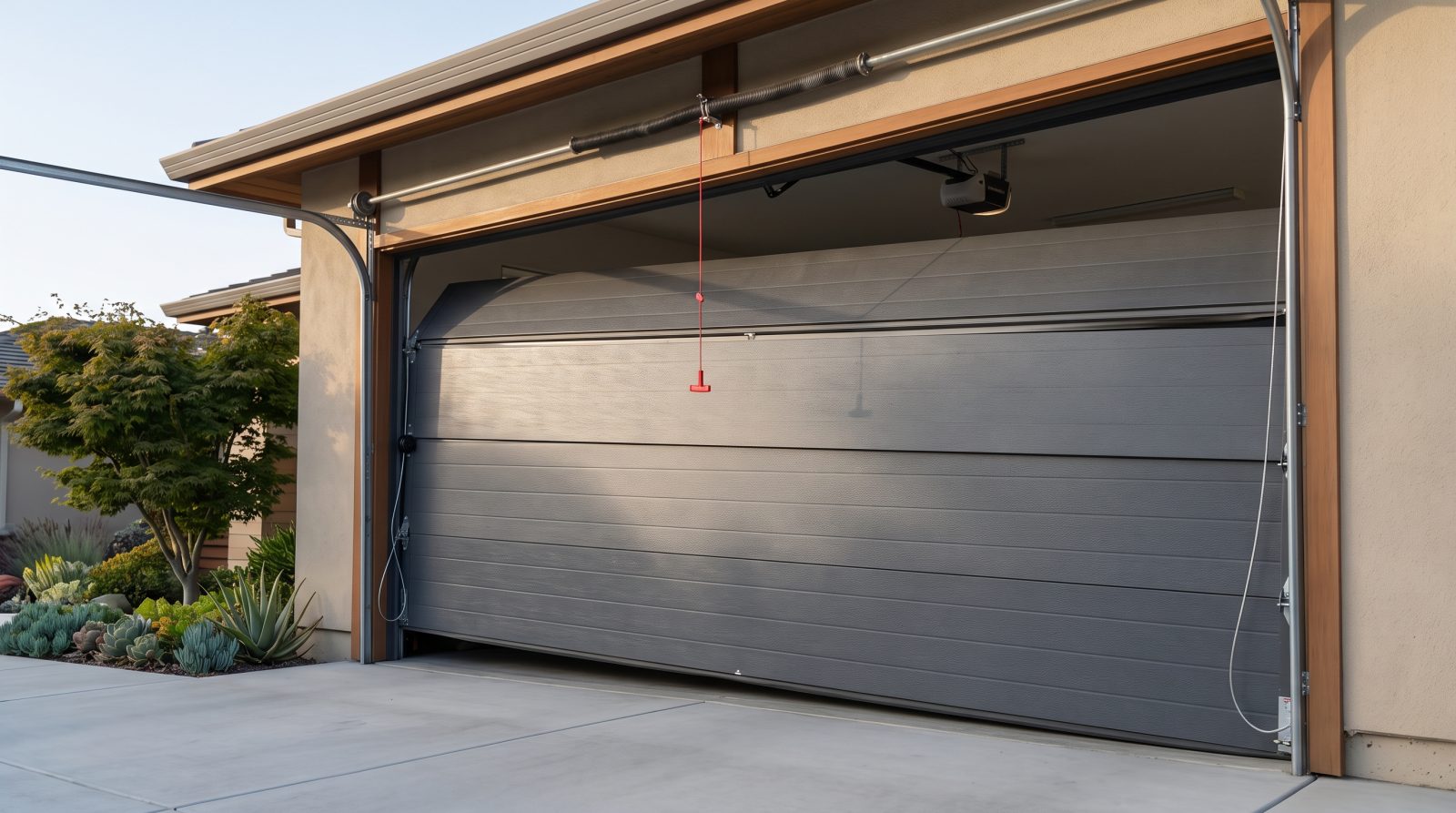
Start Here: Quick Safety Checks Before You Touch Anything
Before you grab a ladder or start yanking on the door, take thirty seconds to rule out the easy stuff. A surprising number of "dead" garage doors are simply doors that lost power, got bumped into a locked mode, or hit a remote-battery wall. Working through these first can save you a service call entirely, and it makes any later diagnosis faster and safer.
Equally important is knowing what NOT to do. If the door feels jammed, refuses to lift even an inch, or you hear a loud bang followed by silence, stop pulling. Forcing a door that's fighting back can turn a small repair into a bent panel, a damaged opener, or an injury. Garage doors are heavy, spring-loaded systems, and the safest move when something feels wrong is to step back and diagnose calmly.
- Confirm power: check that the opener is plugged in and that the outlet has power (a tripped breaker or GFCI is common after a Sacramento summer storm or power flicker).
- Check for a wall-mounted lock or vacation/lock button on the keypad or wall console that may have been pressed accidentally.
- Try the wall button as well as the remote, this tells you instantly whether the problem is the opener or just the remote.
- Look for the manual lock on the door itself (a sliding bar or T-handle); if it's engaged, the motor will strain but the door won't move.
- Never stand directly under a partially open door, and keep kids and pets clear while you investigate.
It's the Opener or Remote (the Easiest Fixes)
If the wall button does nothing but the remote also fails, you may be looking at a power or motor-board issue. But if the wall button works and only the remote is dead, the fix is usually trivial. Remote and keypad batteries fade gradually, then quit, often on the coldest or hottest mornings when Sacramento's temperature swings stress the cell. Swapping a fresh battery into the remote is the single most common "repair" of all.
Beyond batteries, openers can lose their programming, get knocked out of range, or trip an internal lockout after a power surge. Many openers also have a small status light that blinks a diagnostic code; your owner's manual (or a quick search of your opener's brand and model) will translate those blinks into a specific cause. If the motor hums or runs but the door doesn't move, the trolley may have been pulled into manual-release mode and needs to be re-engaged.
- Replace the remote and keypad batteries first, it's cheap and fixes a large share of cases.
- Try reprogramming the remote to the opener if a battery swap doesn't work.
- Count the blinking LED codes on the motor unit and look them up for your specific brand.
- If you recently pulled the red emergency-release cord, re-attach the trolley by pulling the cord toward the door or running the opener until it re-latches.
- Unplug the opener for 30 seconds and plug it back in to clear a surge-induced lockout.
Safety Sensors and Alignment (Why the Door Reverses or Won't Budge)
Every modern garage door opener has two photo-eye safety sensors mounted a few inches off the floor on each side of the door. They shoot an invisible beam across the opening, and if anything breaks that beam, or if the sensors fall out of alignment, the opener refuses to close, and on some units it can also refuse to open normally. This is one of the most common, and most fixable, causes of a misbehaving door.
Sacramento garages collect dust, spider webs, and the occasional knocked-loose bracket, all of which can throw a sensor off. A sensor that's been bumped by a bike, a recycling bin, or a kid's scooter only needs to drift a fraction of an inch to break the connection. Most sensors have small indicator lights: typically one steady light means aligned and happy, while a blinking or dark light points to a blocked or misaligned eye.
- Wipe both sensor lenses gently with a soft, dry cloth to clear dust, cobwebs, or condensation.
- Check that nothing (a box, bin, or cord) is sitting in the beam's path near the floor.
- Look at the sensor indicator lights; if one is blinking or off, the pair is out of alignment.
- Gently adjust a sensor on its bracket until both lights are solid, then test the door.
- If a wire to a sensor is chewed or pinched, that breaks the circuit and needs repair rather than realignment.
Broken Springs and Cables (Stop and Call a Pro)
This is the section where DIY ends and a professional begins. The torsion or extension springs above and beside your door hold an enormous amount of stored energy, often enough to lift a 150-plus-pound door. When a spring snaps, you'll often hear a loud bang like a firecracker, and afterward the door becomes extremely heavy, refuses to open, or the opener strains and gives up. You may also see a visible gap in the coiled spring along the bar above the door.
Springs and the lift cables that work with them are under tremendous tension, and they are responsible for the majority of serious garage-door injuries when handled without the right tools and training. A broken cable can leave the door hanging crooked or off its track. Please do not attempt to replace, adjust, or "unwind" a spring yourself, and don't keep forcing the opener, which can burn out the motor or warp the door. This is exactly the kind of job Garage Door Sacramento handles as a mobile service, arriving with the parts and tools to do it safely in your driveway.
- A loud bang followed by a door that won't lift is the classic broken-spring signature.
- A door that suddenly feels very heavy by hand has likely lost spring support.
- A door that hangs crooked, sits off-track, or has a slack/frayed cable points to a cable failure.
- Do NOT try to repair springs or cables yourself, they store dangerous amounts of energy.
- Stop using the opener so you don't damage the motor, and request a free quote for a mobile spring or cable repair.
Track, Rollers, and Sacramento's Climate Factor
If the door isn't a power, sensor, or spring problem, the issue may be physical: something is binding the door along its track. Rollers can come off the rail, tracks can get bent by a bumped vehicle, and debris or hardened old grease can create just enough resistance to stop a door. With the opener disconnected via the manual-release cord, you can carefully lift the door by hand to feel where it catches, a smooth glide means the mechanics are fine and the problem is electrical, while a grinding or sticking point isolates the trouble spot.
Sacramento's climate plays a quiet role here, too. Long, hot Central Valley summers bake old lubricant into a sticky residue and dry out rollers, while the occasional cold, damp winter morning can stiffen hinges and metal components. Dust and pollen from the surrounding valley settle into tracks year-round. Doors that worked fine all spring sometimes start sticking as the first real heat sets in, simply because the lubrication has given out. A proper cleaning and re-lubrication often restores smooth operation, but a bent track or a roller off its rail should be assessed before you force anything.
- Disconnect the opener (red cord) and lift the door by hand to find where it binds.
- Inspect the tracks for visible dents, bends, or gaps where a roller may have jumped off.
- Clear dirt, leaves, and old hardened grease from the track channel.
- Apply a proper garage-door lubricant to rollers, hinges, and the spring bar, never use heavy grease that traps grit.
- If a track is bent or a roller is off the rail, have it corrected by a pro before running the opener again.
When to Call a Mobile Garage Door Pro in Sacramento
DIY is great for batteries, sensors, lubrication, and clearing simple jams. But there's a clear line worth respecting. If you've ruled out power and remotes, your sensors are aligned, and the door still won't open, or if you see any sign of a broken spring, a snapped or frayed cable, an off-track door, or bent hardware, it's time to bring in help rather than risk an injury or a bigger repair bill.
Because Garage Door Sacramento is a mobile, we-come-to-you service, you don't need to haul anything anywhere or wait by a storefront. A technician comes to your home with the parts and tools to diagnose and repair the door on site, often same-day. If your car is stuck inside and you need to get moving, that mobile model is built for exactly this kind of Sacramento morning. When you're past the safe DIY checks, call or request a free quote and describe what you're seeing, the symptoms you noticed (the bang, the heavy door, the blinking light) help us arrive ready to fix it.
- Call when there's any broken spring, cable, off-track, or bent-track symptom, these are not safe DIY repairs.
- Call when the opener motor runs but the door won't move and the trolley is already engaged.
- Call when you've replaced batteries, cleared sensors, and the door still won't respond.
- Mobile service means a tech comes to your driveway with parts, often same-day, no storefront trip required.
- Describe your symptoms when you request a free quote so the visit is faster and better prepared.