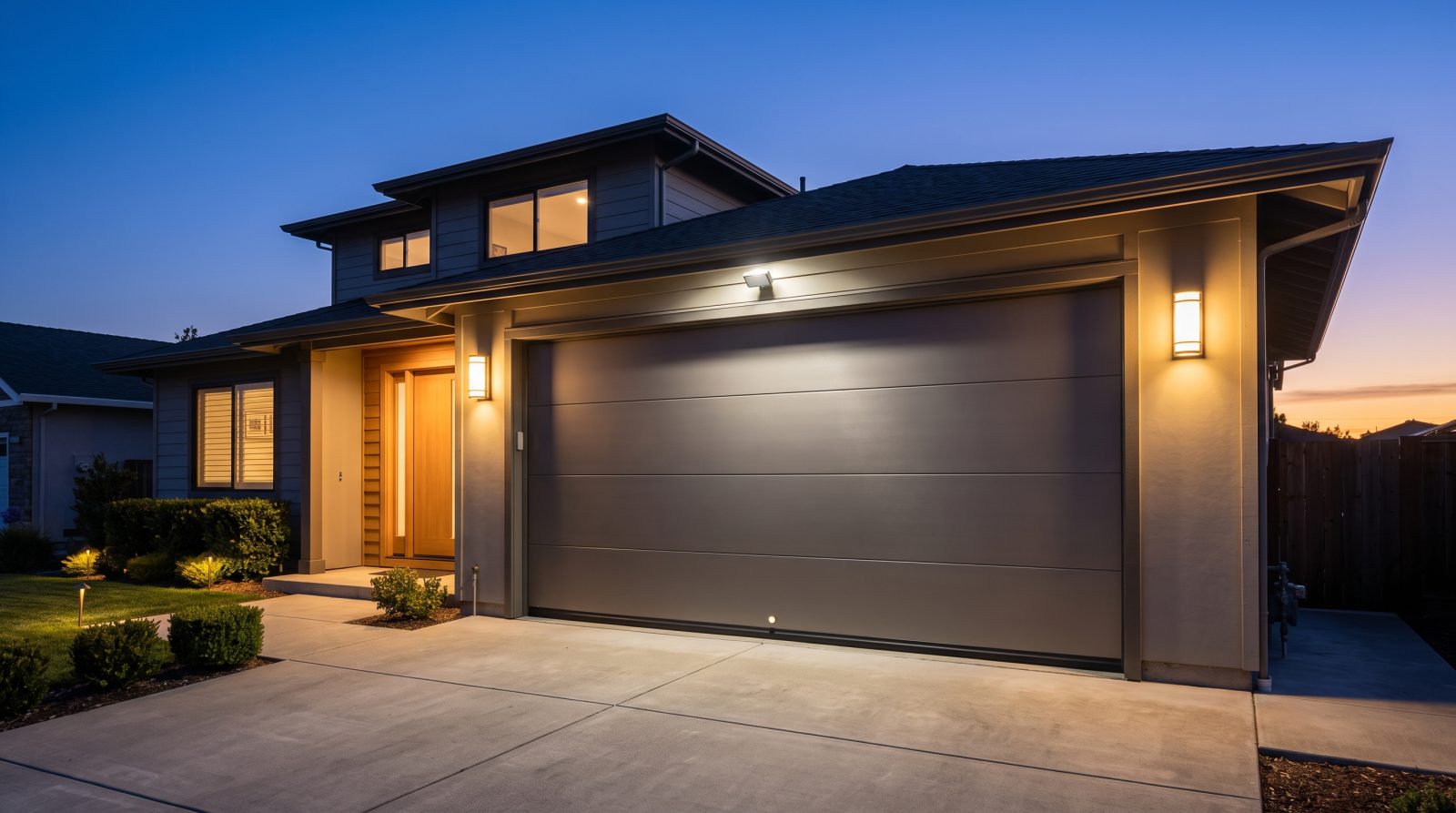
Why the Garage Is a Top Target in Sacramento Homes
A garage is attractive to intruders for reasons that have nothing to do with how nice your house looks. The door panel is large and often the least-reinforced barrier on the property. The opener mechanism can sometimes be defeated from the outside in seconds. And once someone is inside the garage, they are concealed from the street and standing next to a door into your living space that is frequently left unlocked. In effect, breaching the garage can turn a high-visibility break-in into a quiet, sheltered one.
Sacramento's housing mix amplifies this. Many established neighborhoods, such as Tahoe Park, Oak Park, and parts of Carmichael, have older detached and attached garages with aging openers and original side doors that predate modern security standards. Newer master-planned communities in Natomas, Elk Grove, and Roseville tend to have attached garages set close together with alley or side access, and a lot of homeowners there store bikes, tools, and second vehicles that are worth grabbing. In both cases, the pattern is the same: easy access plus valuable contents.
There is also a seasonal and behavioral angle specific to the region. Sacramento summers are hot, and it is extremely common to leave the garage door cracked or fully open for airflow while working in the yard, doing laundry in the garage, or letting the space cool in the evening. An open or partially open door is an open invitation, and an opportunistic thief on foot or bike can be in and out before you notice. Recognizing that the garage is a primary target, rather than an afterthought, is the first and most important step toward securing it.
- The door panel is the widest entry point on most homes and often the least reinforced
- The interior garage-to-house door is frequently left unlocked, turning a garage breach into a home breach
- Remotes left in unlocked vehicles hand an intruder the keys to your garage
- Open or cracked doors for summer airflow create easy opportunistic access
- Garages store high-value, easy-to-carry items like bikes, tools, and electronics
Close the Emergency-Release Loophole
Every garage door with an automatic opener has a manual emergency release, the red cord and lever that disconnects the door from the opener so you can lift it by hand during a power outage. It is a genuine safety feature, but it is also one of the most exploited weaknesses on residential garages. On many doors, an intruder can slip a coat hanger or a thin tool through the small gap at the top of the door, hook that release cord, and pop the door free of the opener. From there it lifts open by hand. This technique is well known and takes only seconds on an unprotected door.
The most effective fix is a release-cord guard or shield that blocks access to the lever from the outside while keeping it usable from inside. Shortening or removing the dangling handle so there is nothing easy to hook also helps, as does zip-tying the release in a way that still allows an emergency pull from inside but resists a quick yank from a tool. The right approach depends on your specific opener and door model, because some carriages and trolleys are easier to defeat than others, and you never want to compromise the legitimate safety function of the release.
If your garage has windows in the door panels, the emergency release becomes even more vulnerable because an intruder can see exactly where the cord is. Frosted film or covering the line of sight to the release mechanism removes that advantage. Because the emergency release is a safety device, it is worth having the guard installed and tested by someone who understands the mechanism so that it both resists the hanger trick and still functions in a real power outage. This is a quick, high-impact upgrade we can handle on a mobile visit anywhere in the Sacramento area.
- The red emergency-release cord can be fished with a coat hanger through the top door gap
- Install a release-cord guard or shield that blocks outside access but stays usable inside
- Shorten or remove the dangling handle so there is nothing easy to hook
- Frost or block window panels so the release location is not visible from outside
- Always preserve the release's real function for power-outage emergencies
Upgrade Outdated Openers and Remotes
Opener technology has changed a great deal, and the gap between old and new units is a security issue, not just a convenience one. Older openers used fixed codes, meaning the remote sent the same signal every time it was pressed. With an inexpensive device, that signal can be captured and replayed to open the door, a technique known as code grabbing. If your opener is more than a couple of decades old, or you are not sure how old it is, there is a real chance it relies on this outdated and vulnerable approach.
Modern openers use rolling-code technology, which changes the code with every press so a captured signal cannot be reused. Upgrading to a rolling-code opener closes one of the most overlooked electronic vulnerabilities on a garage. Many newer units also add useful security layers such as smartphone connectivity that alerts you if the door is left open, automatic-close timers, and activity logs so you can see when the door was operated. For Sacramento homeowners who travel or have teenagers coming and going, those alerts turn the garage from a blind spot into something you can actually monitor.
Remotes themselves deserve attention too. Clip-on visor remotes are a liability because so many vehicles are broken into or left unlocked in driveways. A keychain remote that stays with you, or a smartphone-based opener, removes the remote from the car entirely. Keypads mounted outside should use a code you change periodically and never share casually, including with delivery or service people who only needed it once. If your opener is aging, a mobile assessment can confirm whether it uses fixed or rolling codes and what upgrade path makes sense for your door.
- Old fixed-code openers can be defeated by capturing and replaying the remote signal
- Rolling-code openers change the code every press and shut down replay attacks
- Smart openers add open-door alerts, auto-close timers, and activity history
- Stop clipping remotes in the car; use a keychain remote or smartphone control
- Change exterior keypad codes periodically and avoid sharing them widely
Don't Forget the Side Door, Windows, and Track
The overhead door gets all the attention, but a large share of garage break-ins go through the standard man door on the side or back of the garage. These doors are often the original builder-grade unit with a hollow core, a basic knob lock, and a strike plate held by short screws that pull out with one good kick. Because the side door faces a fence line or side yard, an intruder working on it is hidden from the street the entire time. Upgrading this door to a solid-core slab, adding a deadbolt, and replacing the strike-plate screws with long structural screws that bite into the framing dramatically increases how hard it is to force.
Windows are the next overlooked path. Garage windows let intruders see what you are storing and, more importantly, see whether the emergency release or an interior door is accessible. Many garage windows also have weak latches. Frosted film, security film that resists shattering, or simple interior covering removes the visibility advantage and slows down anyone trying to break and reach through. If a window is large enough for a person to climb through, it deserves the same scrutiny you would give a ground-floor house window.
The door's track and the door-frame gaps matter as well. A door that is poorly aligned or that has loose, worn rollers can sometimes be pried or lifted at a corner, especially older single-panel doors. Side locks, slide bolts, or track locks that physically pin the door in place add a mechanical layer that an opener-defeat trick cannot bypass, which is especially worth considering for a detached garage or any door that is left unattended for long stretches. A mobile inspection can check alignment, roller condition, and frame gaps and recommend the right reinforcement for your specific door.
- The side man door is a common entry point and is usually the weakest part of the garage
- Upgrade to a solid-core door, add a deadbolt, and use long structural strike screws
- Use frosted or security film on garage windows to remove visibility and slow break-ins
- Treat any person-sized garage window like a ground-floor house window
- Add slide bolts or track locks to physically pin the door, especially on detached garages
Smart Habits and Layered Deterrents
Hardware does a lot, but everyday habits decide whether that hardware ever gets tested. The single most valuable habit is treating the interior door between the garage and the house exactly like a front door: keep it locked with a deadbolt, every time. That one practice means even a successful garage breach does not become a home invasion. The second is never leaving the overhead door open or cracked while you are inside the house or in the backyard, no matter how hot it is. If you want airflow, an open side door with a secured screen is far safer than a wide-open main door.
Layering visible deterrents around the garage discourages the opportunistic intruder who makes up the bulk of residential break-ins. Motion-activated lighting on the driveway and any side approach removes the cover of darkness. A visible camera at the garage, or a smart opener that records activity, raises the risk for anyone considering the door. Keeping the garage perimeter clear of ladders, bins, and tools that could be used to reach a window or climb means you are not supplying the burglar's toolkit. Trimming back shrubs near the side door and windows removes hiding spots, which matters on the many Sacramento lots with mature landscaping along fence lines.
Finally, build a simple routine for the times you are most exposed. Before leaving home or going to bed, confirm the main door is fully closed and the interior door is locked. When you go on vacation, unplug the opener or use its vacation lock so no remote signal can operate it, and consider having a neighbor keep an eye on the driveway. None of these steps is expensive, and together they convert your garage from the easiest way into your home into one of the harder ones. If you would like a professional set of eyes on the whole system, request a free quote and we will come to you anywhere in the Sacramento area to assess and harden your garage.
- Keep the interior garage-to-house door locked with a deadbolt at all times
- Never leave the main door open or cracked while you are inside or in the yard
- Add motion lighting and a visible camera to deter opportunistic intruders
- Keep ladders, bins, and tools away from windows so they can't be used for access
- Use the opener's vacation lock or unplug it when you travel