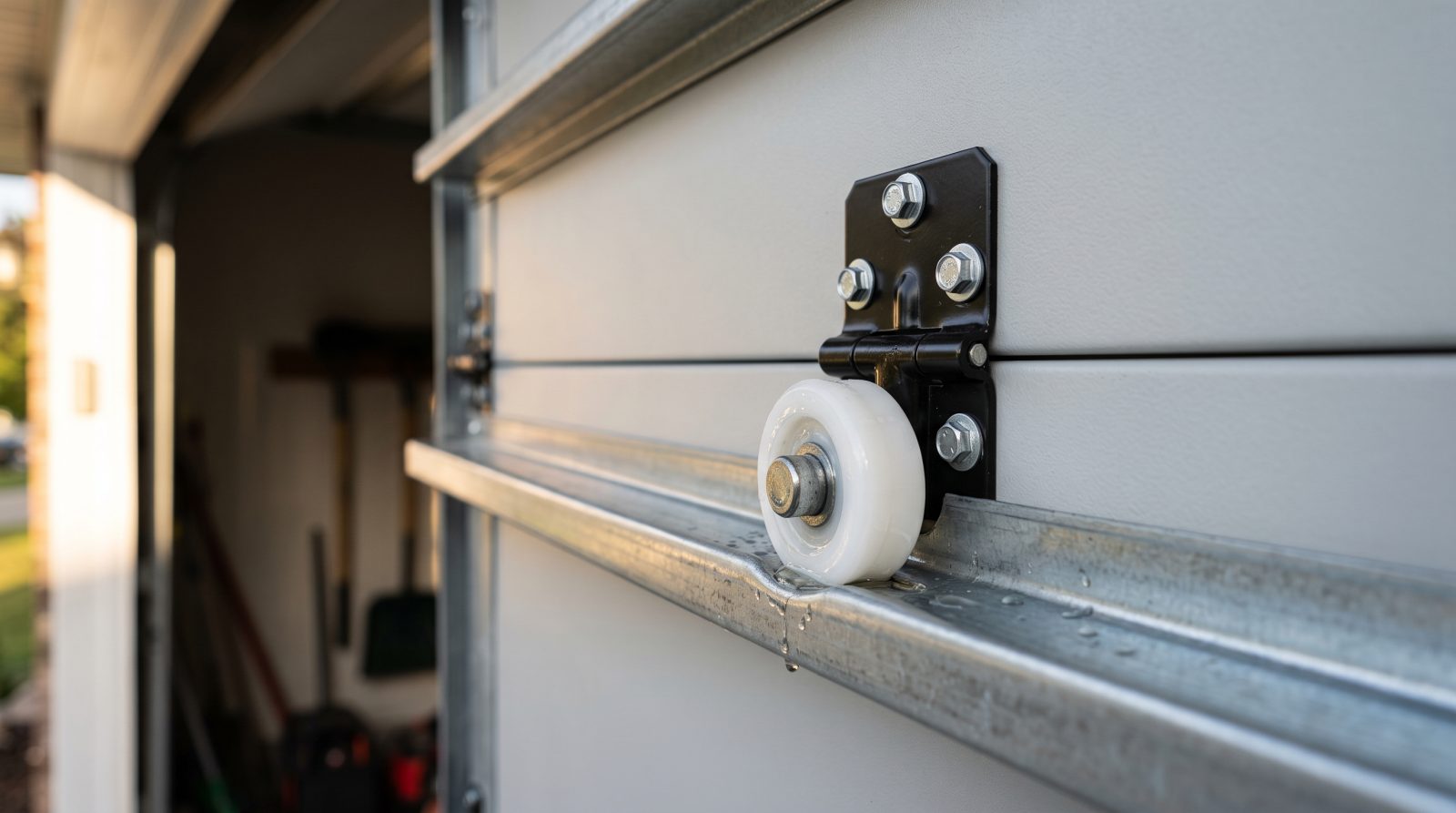
What Your Garage Door's Noise Is Actually Telling You
Garage doors don't make random sounds. Each type of noise points to a specific part and a specific kind of wear, so learning to read them is the fastest way to know whether you're dealing with a five-minute fix or a safety issue. Listen for when the noise happens too: at the very start of the lift, halfway up, near the top, or only when the door is closing. The timing narrows down the culprit as much as the sound itself.
Most of what people call a 'noisy door' falls into a handful of distinct sounds. A high-pitched squeal or screech usually means dry rollers, hinges, or springs that have lost their lubrication. A grinding or scraping noise often points to worn rollers, a misaligned track, or a failing opener gear. A loud bang or pop, especially a single sharp crack, can mean a broken torsion spring and should be treated as urgent. Rattling and vibration typically come from loose hardware, while a rhythmic thud or clunk often traces back to a flat spot on a roller or a bent track section.
The reason this matters is that the cheap, harmless noises and the expensive, dangerous ones can sound similar to an untrained ear. A squeak from a dry hinge is nothing to worry about. A strained, laboring sound from the opener as it fights to lift the door can mean the springs are losing tension and the motor is taking a load it was never designed to carry. Knowing the difference protects both your wallet and your safety.
- Squeal or screech: dry rollers, hinges, bearings, or springs needing lubrication
- Grinding or scraping: worn nylon/steel rollers, track misalignment, or a stripped opener gear
- Loud bang or pop: possible broken torsion spring (treat as urgent, stop using the door)
- Rattling or vibration: loose nuts, bolts, brackets, or chain slack
- Rhythmic thud or clunk: flat-spotted roller, bent track, or worn hinge
The Most Common Causes of a Loud Garage Door
Once you know the sound, it helps to understand the underlying causes, because the same noise can come from more than one source. The single most common reason for a noisy door is simply lack of lubrication. The moving metal parts of a garage door, the rollers, hinges, springs, and bearing plates, need a thin film of lubricant to glide quietly. As that film dries out, metal grinds on metal and the whole door gets loud. This is normal wear and is the easiest issue to address.
Loose hardware is the second big offender. A garage door cycles thousands of times a year, and every cycle sends vibration through the bolts and brackets that hold it together. Over time those fasteners back off slightly, and a door that was tight when it was installed starts to rattle and shake. Worn rollers are another frequent cause: standard builder-grade rollers often have exposed metal or basic plastic that wears unevenly, develops flat spots, and gets noticeably noisier as they age.
Deeper causes get more serious. A track that has been knocked out of alignment, often by a parked car bumping it or by settling, forces the rollers to bind and scrape. The opener itself can be the source of grinding if its drive gear is wearing out or if a chain has gone slack. And the springs, the most heavily loaded part of the whole system, can squeal when dry or bang loudly when a coil finally fails. Identifying which of these you have is the line between a DIY tune-up and a call to a professional.
- Dried-out lubrication on rollers, hinges, springs, and bearings (most common)
- Loose nuts, bolts, and brackets from years of vibration
- Worn or flat-spotted rollers, especially cheap plastic or exposed-metal types
- Bent or misaligned track forcing rollers to bind
- Worn opener drive gear or a slack drive chain
- Dry or aging springs nearing the end of their service life
Safe DIY Fixes You Can Do Yourself
A good number of noisy-door problems can be quieted safely with basic tools and an hour of your time. Start with lubrication, because it solves the majority of squeaks and screeches. Use a garage-door-specific lubricant or a quality silicone or lithium-based spray. Avoid WD-40 as a long-term lubricant: it's a solvent and degreaser that can actually strip the existing film and attract dust, leaving the door noisier within weeks. With the door closed, apply lubricant to the hinges, the roller stems and bearings, and lightly across the torsion springs, then run the door a few times to work it in and wipe off the excess.
Tightening hardware is the next safe job. With a socket wrench, gently snug up the bolts on the hinges, the roller brackets, and the bracket that anchors the track to the framing. The key word is gently. You're removing the rattle-causing slack, not torquing everything as hard as you can, which can strip threads or crack a hinge. Check the bolts holding the track to the wall and the lag screws in the ceiling bracket that supports the opener rail, as a loose opener mount is a common source of vibration and clunking.
There are firm limits to safe DIY, and they exist for good reason. Never attempt to adjust, tighten, loosen, or 'fix' the torsion springs above the door or the lift cables on either side. Those springs hold an enormous amount of stored energy, and the cables are under matching tension; a slip can cause severe injury. If lubrication and tightening don't quiet the door, or if the noise is a grind, bang, or strained motor sound rather than a simple squeak, that's your signal to stop and bring in a pro rather than pushing further.
- Apply garage-door-rated silicone or lithium lubricant to hinges, rollers, and springs; skip WD-40 for lubrication
- Run the door a few cycles after lubricating, then wipe off drips
- Snug (don't over-torque) hinge, roller-bracket, and track-mount bolts
- Check the ceiling lag screws holding the opener rail
- Never touch torsion springs or lift cables yourself, they store dangerous energy
- If grinding, banging, or a straining motor remains, stop and call a professional
How Sacramento's Climate Makes the Problem Worse
Sacramento's weather is genuinely hard on garage door hardware, and it speeds up the wear that leads to noise. Our long, dry summers, with stretches of triple-digit heat from the Valley sun, bake the lubricant off moving parts faster than in milder climates. A door that was quiet in spring can start squealing by late July simply because the lubrication film has dried and thinned in the heat. That's why Sacramento doors often need re-lubrication more than once a year.
The Valley's fine, dry dust is the other half of the problem. Wind kicks up grit off the Delta and surrounding farmland, and that dust settles into roller bearings and tracks. When it mixes with old or cheap lubricant, it forms an abrasive paste that grinds away at rollers and bearings instead of protecting them. Homes near American River Parkway, in established neighborhoods like Land Park and East Sacramento, and out in newer developments around Natomas, Elk Grove, and Folsom all see this, regardless of the door's age.
Then there's the daily temperature swing. Sacramento's dry climate means hot afternoons and surprisingly cool nights, and metal expands and contracts with every cycle. That constant movement works hardware loose faster than a steady climate would, so the rattles and vibrations tend to show up sooner here. None of this is cause for alarm, but it does mean a Sacramento garage door benefits from more frequent maintenance than the manufacturer's generic schedule suggests, and it explains why a door can get loud seemingly out of nowhere.
- Triple-digit Valley summers dry out lubricant faster, so doors need re-lubing more often
- Fine Central Valley dust mixes with old grease into an abrasive paste in rollers and tracks
- Wide day-to-night temperature swings expand and contract metal, loosening hardware
- Older neighborhoods and newer developments alike are affected, regardless of door age
When to Call a Mobile Garage Door Pro
Some noises are a clear sign to stop DIY and bring in a technician, both for a lasting fix and for your safety. A loud bang or pop followed by a door that won't open, or that suddenly feels extremely heavy, almost always means a broken torsion spring. Do not try to force the door open and do not attempt to replace the spring yourself; this is one of the most common causes of serious garage door injuries. The same goes for a frayed or loose cable, a door that lifts crooked or sticks halfway, and any grinding from inside the opener housing.
As a mobile garage door company serving the Sacramento area, we come to you, which is the practical advantage when a noisy door turns into a stuck or unsafe one. A door that's grinding badly or laboring on a worn spring can fail at an inconvenient moment, often trapping a car inside. Because we're fully mobile with diagnostic tools and common parts on the truck, we can usually pinpoint the source of the noise and resolve it in a single same-day visit at your home, rather than asking you to haul anything anywhere.
When a noise has you unsure, the smart move is a professional inspection before a small problem becomes a sudden failure. A technician can test the spring tension, check the door's balance, inspect rollers and cables for wear, realign the track, and service the opener, then tell you honestly what needs attention now versus what can wait. If your door is making sounds you can't quiet with lubrication and a wrench, or any sound that worries you, request a free quote and we'll come diagnose it where the door is.
- Loud bang plus a door that won't lift or feels very heavy: likely a broken spring, stop using it
- Frayed or loose cables, or a door that lifts crooked or sticks halfway
- Grinding from inside the opener, or a motor that strains and stalls
- Mobile service means we come to your Sacramento home, often same-day
- When in doubt, request a free quote for an on-site inspection before a small noise becomes a failure